Clarke Quay
Tuesday, February 22, 2011

Now with Rella back with us, we happily carried on with our trail! And so at Clarke Quay, we bombarded her with lots of questions about Clarke Quay!
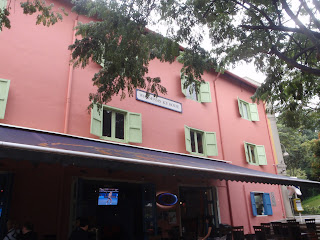
“Do you see? There, on River Valley Road, near the entrance to Clarke Quay. That’s Whampoa’s Ice House! It belonged to Hoo Ah Kay. He was an early immigrant from Whampoa, China, who imported ice from Boston in the mid-19th century before there were even ice-making facilities here in Singapore.” Rella pointed to the shop house across the road.
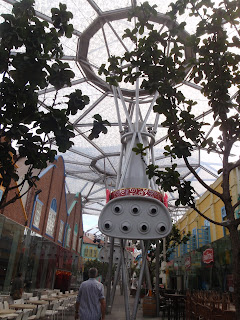

And we’d never imagine that the exciting place where we go clubbing at night would boast such a rich historical significance! Where the fishermen and traders built their business more than a hundred years ago, is now where The Cannery is one of the anchor tenants, providing today’s urbanites with a variety of entertainment while the night is still young.

By then, we were getting hungry and wanted desperately to have lunch! We walked past a really cool-looking restaurant with a really cool name – IndoChine The Forbidden City. When we went in and sat down to place our orders, Rella got really excited. Apparently, that was the oldest building at Clarke Quay and was called the River House, built in the 1880s as a mansion for a Chinese pepper and gambier trader called Tan Yeok Nee. To date, it is one of the few Southern-Chinese-style residential buildings still standing in Singapore!

Now with Rella back with us, we happily carried on with our trail! And so at Clarke Quay, we bombarded her with lots of questions about Clarke Quay!
As usual, in order to "save" Raffles, she simply told us what she knew.
Clarke Quay was named after Singapore’s second governor, Sir Andrew Clarke. It lies near the mouth of the Singapore River, and was the hub of commerce in the late 19th century.
“Back then, it was filled with Samsui women, hawkers, fishermen, traders and Asian and European workers. Then, it transformed into a bustling seaport as trade between the East and West thrived!” Listening, we were as impressed as Rella sounded.

“Do you see? There, on River Valley Road, near the entrance to Clarke Quay. That’s Whampoa’s Ice House! It belonged to Hoo Ah Kay. He was an early immigrant from Whampoa, China, who imported ice from Boston in the mid-19th century before there were even ice-making facilities here in Singapore.” Rella pointed to the shop house across the road.
That’s cool! It seems like the Chinese and European merchants have contributed much to our growth as a country by bringing along their experience and expertise, and also their own architectural styles. Nevertheless, we still prefer the modern skyscrapers we have today!


And we’d never imagine that the exciting place where we go clubbing at night would boast such a rich historical significance! Where the fishermen and traders built their business more than a hundred years ago, is now where The Cannery is one of the anchor tenants, providing today’s urbanites with a variety of entertainment while the night is still young.

By then, we were getting hungry and wanted desperately to have lunch! We walked past a really cool-looking restaurant with a really cool name – IndoChine The Forbidden City. When we went in and sat down to place our orders, Rella got really excited. Apparently, that was the oldest building at Clarke Quay and was called the River House, built in the 1880s as a mansion for a Chinese pepper and gambier trader called Tan Yeok Nee. To date, it is one of the few Southern-Chinese-style residential buildings still standing in Singapore!
About Us
Story
Reflections
Links